
Govind International has been consistently delivering reliable energy solutions to India's core industries.
Govind International has been consistently delivering reliable energy solutions to India's core industries.

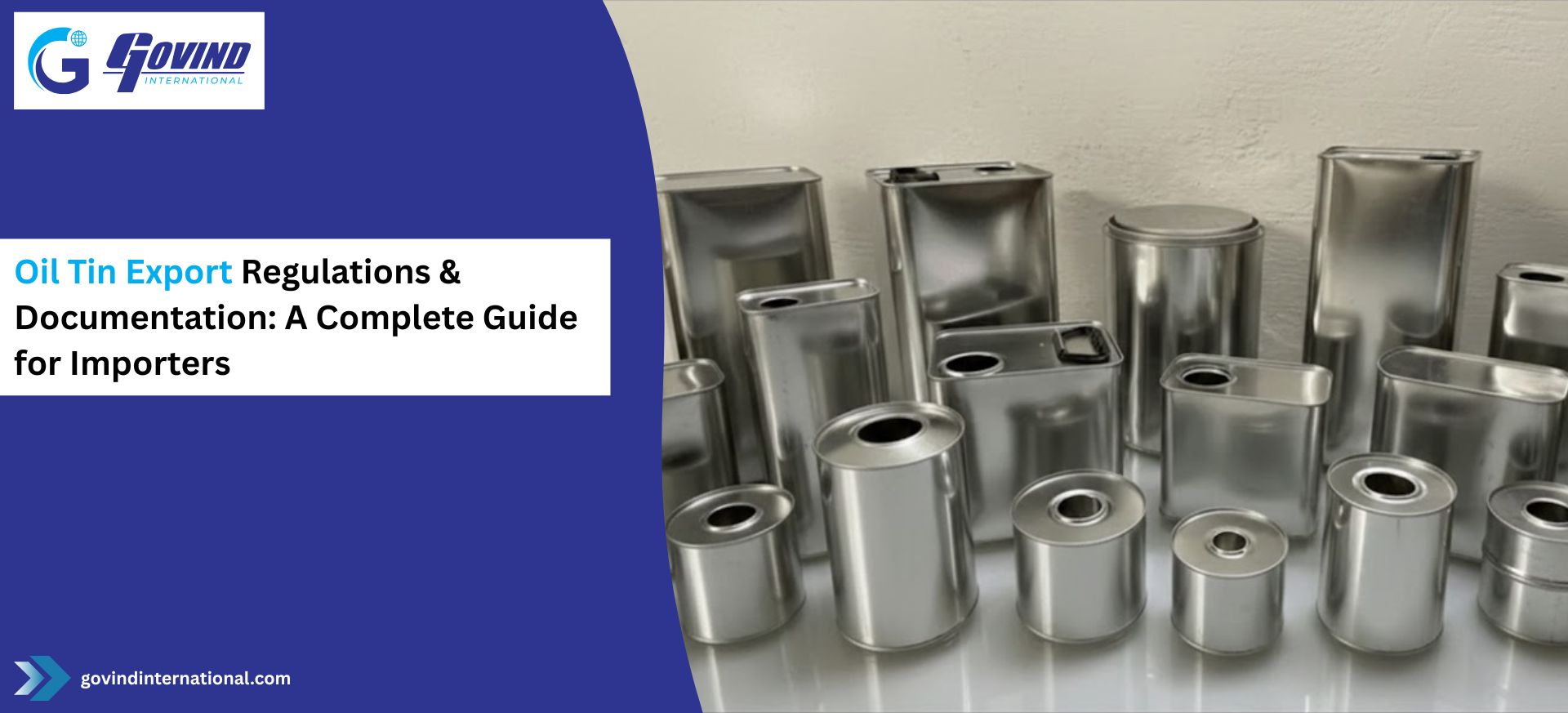
Importing oil tins may look straightforward at first, but international trade regulations tell a different story. From material standards to customs documentation, every step must follow strict compliance rules to avoid delays, penalties, or rejected shipments. For importers sourcing oil tins from India, understanding oil tin export regulations and documentation is essential for smooth and risk-free trade.
This guide explains everything importers need to know—from compliance requirements and packaging rules to documentation and country-specific regulations—while highlighting how Govind International simplifies the entire export process.
Export regulations exist to protect consumers, ensure safety, and maintain fair trade practices. For importers, following oil tin export regulations helps in:
Working with a compliant oil tin exporter from India significantly reduces regulatory risks and operational challenges.
Material quality is a critical factor in oil tin exports. Export-grade oil tins are manufactured using high-quality tinplate or metal sheets that offer:
Reputable exporters follow strict quality checks to ensure oil tins meet international packaging standards before shipment.
For edible oil tin export, food safety compliance is mandatory. This includes:
Failure to meet food-grade standards can result in shipment rejection, making compliance a top priority for importers.
Proper packaging and labeling help prevent damage and ensure traceability. Export packaging regulations generally require:
Oil tins must also be securely packed to withstand rough handling during international transport.
Accurate documentation is vital for oil tin customs clearance. The most common export documents include:
Missing or incorrect documents are among the most common causes of shipment delays.
Correct HS code classification is essential for calculating import duties and taxes. An incorrect HS code may lead to:
Experienced exporters help importers identify the correct HS code to ensure smooth customs processing.
Import regulations can vary by country. Some regions require additional certifications or inspections, such as:
Understanding country-specific requirements in advance helps avoid last-minute complications.
Govind International is a trusted oil tin exporter from India, offering reliable export solutions for global buyers. Importers choose Govind International because of:
With experience in international trade, Govind International ensures hassle-free oil tin imports for buyers worldwide.
Our oil tins are available in custom sizes ranging from 500 ml to 20 liters, making them suitable for both manual and automated filling lines. We offer multiple shape options, including round, square, and rectangular tins, to meet diverse packaging and stacking requirements.
To support global branding needs, we also provide:
Every batch undergoes strict quality testing to ensure leak-proof performance, rust resistance, and stackability, even during extended transit.
Understanding oil tin export regulations, documentation, and compliance requirements is key to successful international trade. Importers who partner with experienced exporters benefit from smoother customs clearance, reduced risks, and reliable deliveries.
With export-grade manufacturing, strong quality control, and complete documentation support, Govind International stands out as a dependable partner for oil tin imports across global markets.